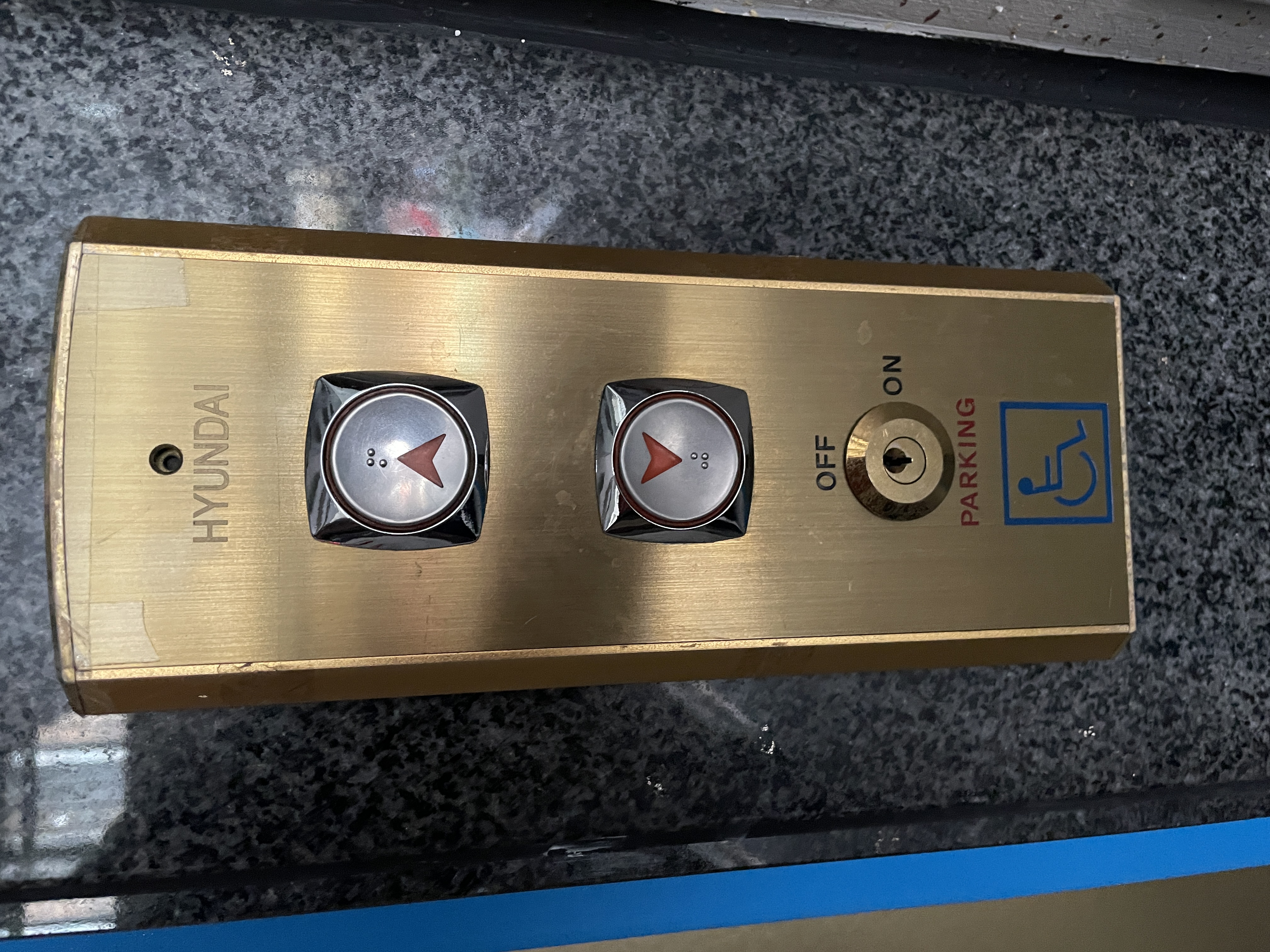
Have you ever seen an elevator where the “down” button was flipped upside down and installed as the "up" button? You might not even realize what’s wrong—unless you read with your hands rather than your eyes.
The photo above is one I took of the elevator buttons in an apartment building I used to live in. Take a closer look, and you’ll be able to spot the problem.
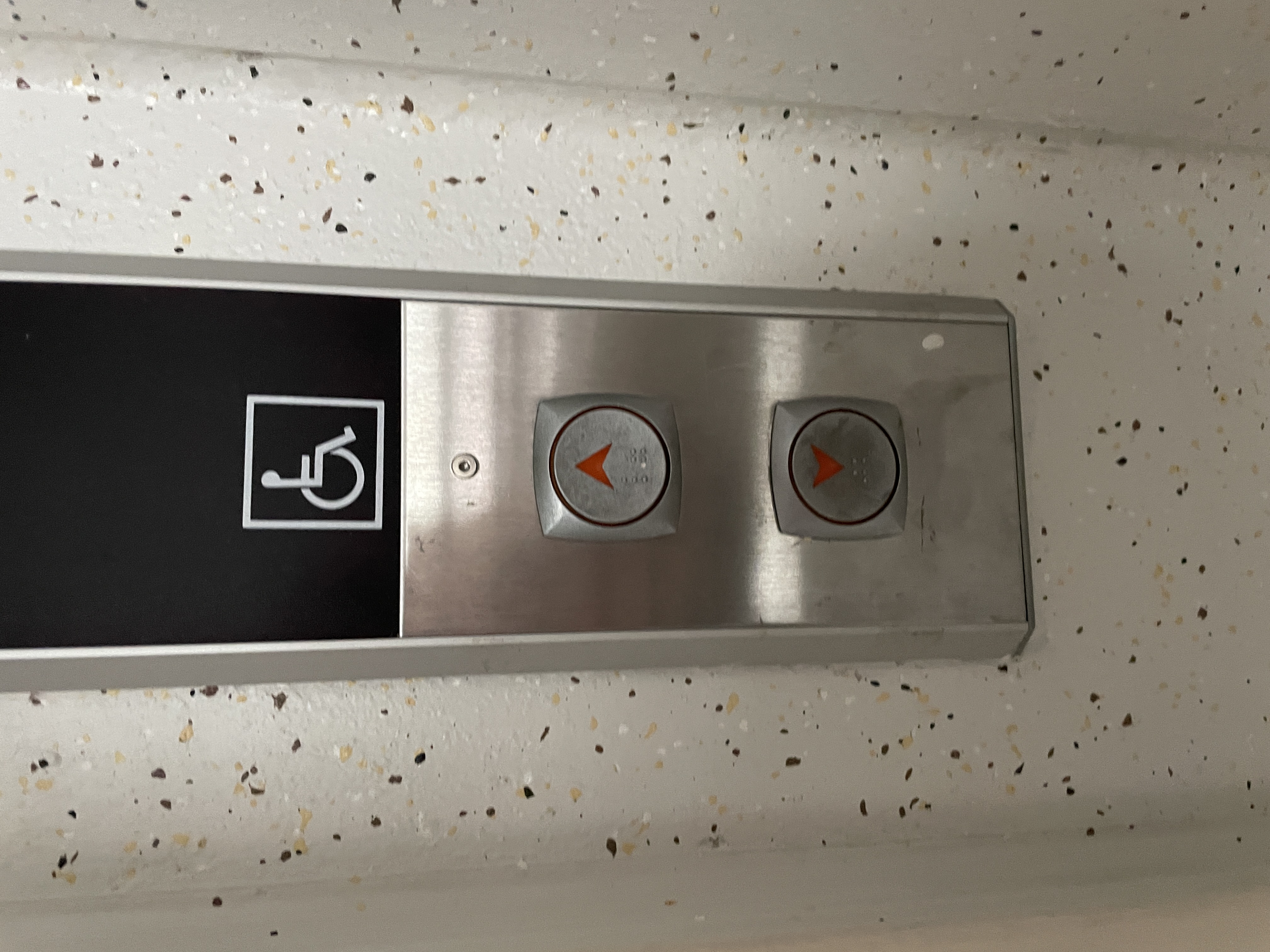
This is what it looks like when the button is installed correctly, which was taken from another floor.
I don’t know the reason—perhaps they were short on stock for the up buttons. But the truth is, unless it’s a problem we are personally experiencing or have experienced ourselves, it’s hard for most of us to pay attention to these kinds of details. After noticing this issue, I became interested in braille and started exploring ways to make better use of it in my own way. That’s how I got to know about the DevFive team, who are developing braillify, a Rust-based open-source library for Korean braille translation and reverse translation.
This library was being built as a rule-based translation compiler following the government-issued 2024 Revised Korean Braille Regulations, but there were still several parts that had not yet been implemented. After talking with the team, I decided to contribute to what seemed most urgent at the time: braille translation for text that mixes English with Korean.
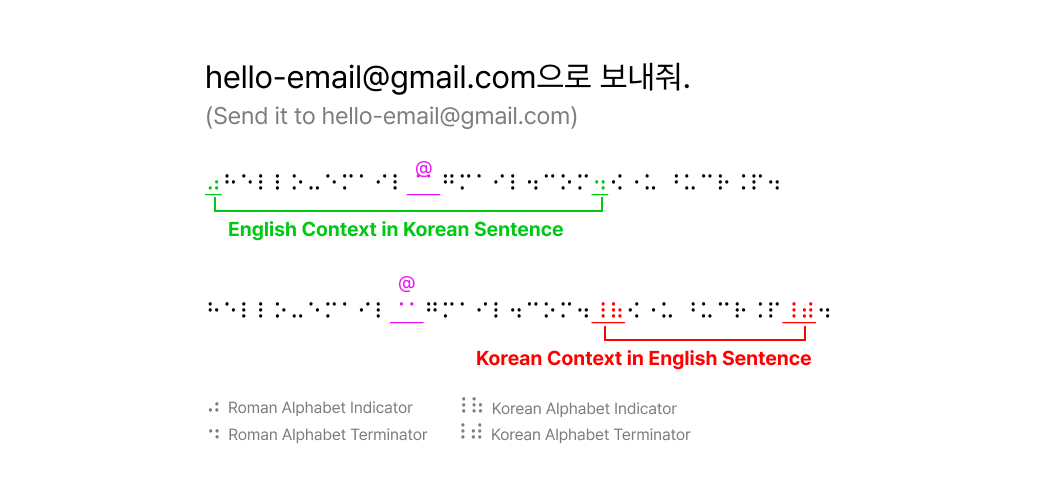
This is where the real challenge emerged. Braille translation sometimes requires an understanding of context. When Roman alphabets and Korean characters are mixed, whether you attach the Roman-letter start/end indicators or the Hangul start/end indicators depends on whether the primary language is English or Korean. The problem is that it’s difficult to determine this quantitatively based on language frequency or length alone. For example, in the sentence below, even though the email address is longer, the sentence should still be translated as a Korean sentence:
After identifying this issue, I changed direction and began exploring braille translation using LLMs. Through further discussions with the DevFive team—who actively collaborate with professional braille transcribers—I realized that building such a system could have many applications beyond simple translation, including the construction of test datasets. With that realization, I started this project in earnest with a teammate who shared the same vision.